


Species that are considered uncertain risk need a more in-depth assessment beyond the Ecological Risk Screening Summary to better define the species’ risk to U.S. environments.
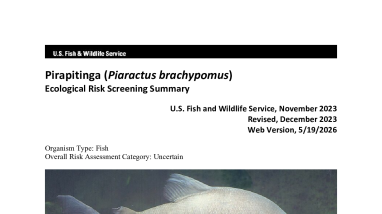
Piaractus brachypomus, Pirapitinga, is a fish that is native to Amazon River Basin in South America. This species is common in the aquarium and aquaculture industries globally. P. brachypomus can reach large sizes up to 88 cm and 25kgs. It is commonly misidentified as piranha when sold. It is mostly vegetarian and frugivorous in its native range but a dietary shift toward piscivory and insectivory has been observed in part of its introduced range. There are observations of this species in the United States but there have been no known established populations. The History of Invasiveness for Piaractus brachypomus is classified as Data Deficient. P. brachypomus has been reported anecdotally to have impacts on native fish populations and to be responsible for human injuries, but more evidence is needed to support these anecdotal observations. This species is regulated in New Mexico under the current scientific name and in Hawaii under a synonymous scientific name. The climate matching analysis for the contiguous United States indicated there is establishment concern for this species, particularly in southern Florida. Most of the contiguous United States had a low match with this tropical species. The Certainty of Assessment for this ERSS is classified as Low due to information on impacts of introductions coming from anecdotal sources and gaps in georeferenced observations. The Overall Risk Assessment Category for Piaractus brachypomus in the contiguous United States is Uncertain.
Publication date
Type of document
Uncertain Risk
Media Usage Rights/License
Public Domain
Program


Species