


Siletz Bay
Lincoln City, OR 97411
Plan Your Visit
The salt marsh, brackish marsh, tidal sloughs, mudflats, and coniferous and deciduous forestland of Siletz Bay NWR offer unparalleled estuarine habitat for a wealth of plant and animal species, most of which are observable to even casual visitors. Hike the trail, fish from the banks, or take a paddle. For an in-depth look at this Refuge, consider paddling a kayak or canoe up its sinuous creeks and channels. Twice-daily tides ebb and flow across the estuary, constantly altering the landscape and influencing its inhabitants.
Activities
- HIKE the the Alder Island Nature Trail
- PHOTOGRAPH Great Blue Herons and other birds
- PADDLE in the bay and tidal sloughs
- FISH along the banks for salmon
- HUNT waterfowl seasonally in designated areas
Directions
Siletz Bay National Wildlife Refuge is located just south of Lincoln City along US Highway 101. Look for the refuge sign and turn east onto Millport Slough Lane into the refuge parking lot. GPS Coordinates are 44°53’42.87”N 124°00’34.14”W.
This is a fee-free area. There are no fees to use this refuge.
Activities


Get Involved
Whether you want to further conservation, learn more about nature or share your love of the outdoors, you’ve come to the right place. National Wildlife Refuges provide many opportunities for you to help your community and fish and wildlife by doing what you love.
National Wildlife Refuges partner with volunteers, youth groups, landowners, neighbors and residents of urban and coastal communities to make a lasting difference.
Find out how you can help make American lands healthier and communities stronger while doing something personally satisfying.
- Volunteers: Gain new experiences and meet new people while helping to advance wildlife conservation.
- Friends: Join neighbors in helping Refuges restore habitat and expand access to green space.
- Youth: Explore paid and unpaid opportunities to learn and develop leadership skills.
Volunteering
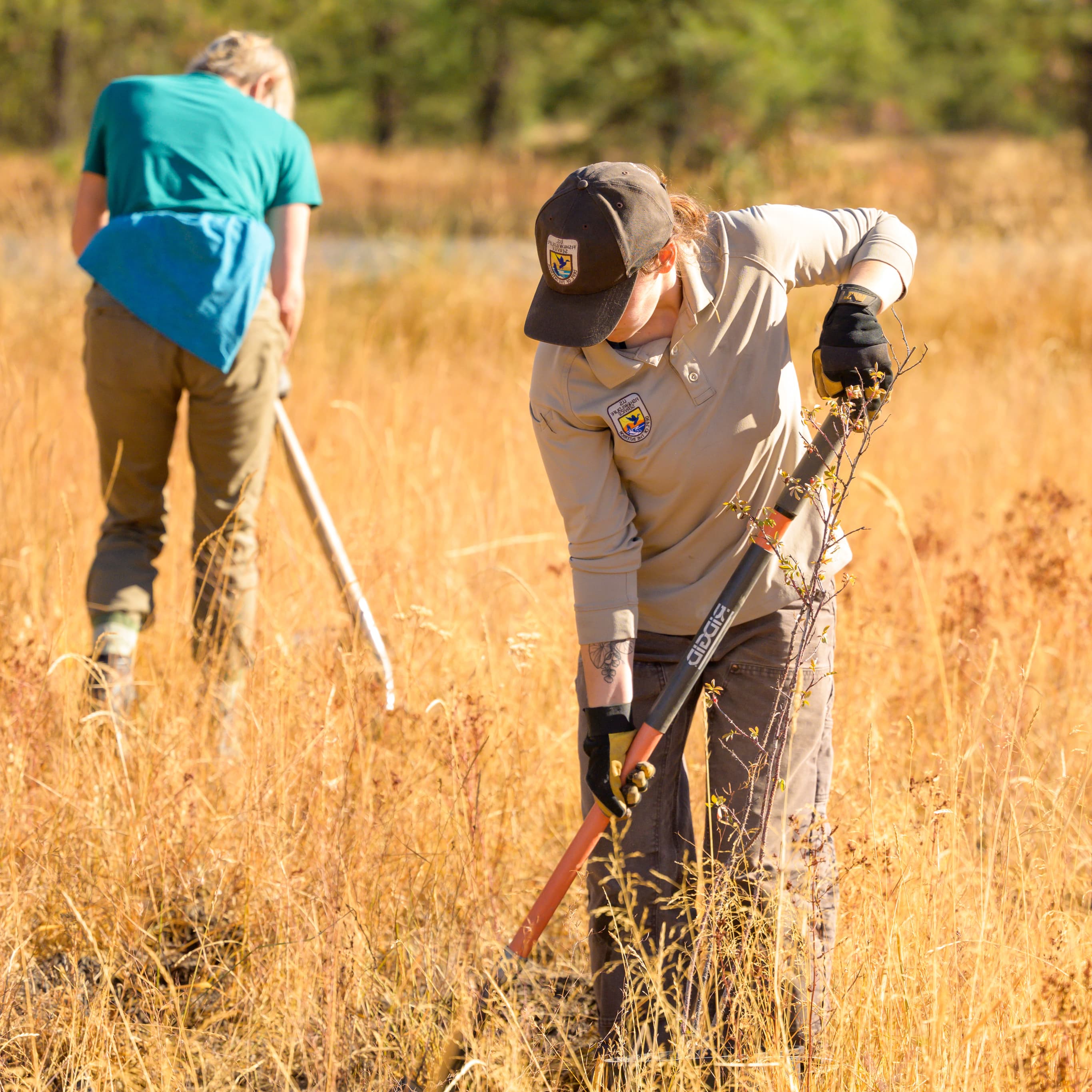
Discover for yourself what tens of thousands of volunteers have learned: Volunteering for the U.S. Fish and Wildlife Service is fun and rewarding in many ways. Master new skills. Meet new friends. Enjoy a sense of accomplishment from doing your part to further wildlife conservation for the pleasure of generations to follow. Check out our station's latest volunteer opportunities on volunteer.gov.
Contact the Oregon Coast National Wildlife Refuge Complex at oregoncoast@fws.gov to learn about our volunteer opportunities.

Working with others to conserve, protect, and enhance fish, wildlife, plants, and their habitats for the continuing benefit of the American people.
Services
Management and Conservation
Refuges deploy a host of scientifically sound management tools to address biological challenges. These tools span active water management to wilderness character monitoring, all aimed at ensuring a balanced conservation approach to benefit both wildlife and people.
Comprehensive Conservation Plan
In accordance with the National Wildlife Refuge System Administration Act and the Wilderness Act, a Comprehensive Conservation Plan (CCP) was finalized for Siletz Bay Refuge by the U.S. Fish and Wildlife Service's Oregon Coast National Wildlife Refuge Complex in 2012.
The purpose of the CCP is to map a vision of the refuges' future desired conditions, addressing issues of land protection, public use, types of habitat to be provided, partnership opportunities, and the management actions needed to achieve this vision. This CCP specifies a management direction for the Refuge for 15 years. Visit this website https://ecos.fws.gov/ServCat/DownloadFile/43907 to view the CCP for Siletz Bay National Wildlife Refuge.
About
Established in 1991 with a donation of 46 acres of tidal salt marsh, Siletz Bay National Wildlife Refuge protects and restores estuarine fish and wildlife habitat along the central Oregon coast. The refuge now encompasses 578 acres of salt marsh, brackish marsh, tidal sloughs, mudflats, and coniferous and deciduous forestland.
The refuge conserves high-quality coastal wetlands and uplands adjacent to Siletz Bay while protecting them from development. Its river, bay, and estuary habitats support birds, mammals, and anadromous fish, including Chinook and Coho salmon, steelhead, and cutthroat trout. These wetlands provide important nursery and rearing habitat where juvenile fish can find food, shelter from predators, and refuge from strong currents.
More than a century of logging, grazing, diking, ditching, and conversion to agriculture significantly altered the Siletz Bay estuary. Much of the land now within the refuge was once pasture, separated from tidal influence to accommodate dairy farming. A central goal of refuge management is to reverse these changes by reconnecting former floodplains to the tides and restoring the natural processes that sustain marshes, tidal shrublands, and forested wetlands.
A small tidal marsh restoration project was completed in 2000. In 2003, the refuge and its partners restored 86 acres at Millport Slough by breaching and removing dikes, filling artificial drainage ditches, and placing large woody debris to improve fish habitat. In 2016, restoration of Alder Island reconnected the island’s interior with brackish tidal water. The area opened to the public in 2017 with a half-mile nature trail and car-top boat launch.
Restoration has continued in the refuge’s Drift Creek Unit, where the historic floodplain once contained a complex mosaic of tidal marsh, scrub-shrub wetlands, spruce swamp, and branching channels. Dikes and drainage systems simplified this landscape, blocked tidal movement, and converted much of the wetland to pasture. The Lower Drift Creek restoration is rebuilding natural channel networks and reconnecting the floodplain to daily tidal processes.
The first phase, completed in 2023, restored approximately 41 acres on two refuge tracts east of Drift Creek Road. Crews lowered about 3,100 feet of perimeter dike, excavated more than a mile of tidal channels, constructed habitat mounds, placed large wood, and removed deteriorating infrastructure. These changes returned tidal flow to the site and began restoring marsh, shrub, and forested wetland habitat.
In summer 2026, the refuge and its partners completed the construction phase of a second major restoration project along Lower Drift Creek. The approximately $1.5 million project restored about 37 acres between U.S. Highway 101 and South Drift Creek Road. Before construction, biologists conducted fish salvage in the existing drainage network. Crews then filled straight agricultural ditches, excavated branching tidal channels, regraded sections of the floodplain, and placed trees and root wads to provide shelter and feeding areas for fish and other wildlife.
The 2026 project was designed to benefit juvenile Coho and Chinook salmon, steelhead, cutthroat trout, birds, and other estuarine wildlife. It also supports broader community benefits by improving water quality, storing carbon, reducing shoreline erosion, and helping the floodplain absorb and disperse high water. The restoration incorporates expected sea-level rise and encourages the recovery of tidal scrub-shrub and spruce swamp habitat, which has become increasingly rare along the Oregon coast.
Following completion of the major earthwork, restoration continued with native seeding and planting. Locally collected willows, Sitka spruce, and other wetland plants are being used to establish resilient vegetation adapted to coastal conditions. Refuge staff and partners will continue monitoring the site, controlling invasive plants, and supporting the transition from former pasture to a functioning tidal wetland.
The Drift Creek project is a collaborative effort involving the MidCoast Watersheds Council, the U.S. Fish and Wildlife Service, the Oregon Department of Fish and Wildlife, the Bureau of Land Management, the Wild Salmon Center, the Lincoln Soil and Water Conservation District, the Confederated Tribes of Siletz Indians, and other organizations, contractors, volunteers, and funders.
Today, refuge staff continue to restore tidal wetlands, monitor wildlife and habitat response, manage invasive species, and maintain opportunities for wildlife observation, boating, fishing, and hunting. Together, these efforts are helping Siletz Bay recover some of the ecological complexity lost during the past two centuries while building a healthier and more resilient estuary for wildlife and people.
Other Facilities in this Complex
Siletz Bay National Wildlife Refuge is managed as one of six Refuges in the Oregon Coast National Wildlife Refuge Complex. See below for the other five Refuges and experience them all.
Refuge Headquarters:
Oregon Coast National Wildlife Refuge Complex
2127 SE Marine Science Drive
Newport, OR 97365
541-867-4550
