


Midway Atoll National Wildlife Refuge and Battle of Midway National Memorial are currently closed to public visitation. Only activities that directly support airfield operations and conservation management of the refuge, memorial and monument are allowed. However, we offer a few exciting virtual experiences that we hope you will enjoy under the Visit Us section.
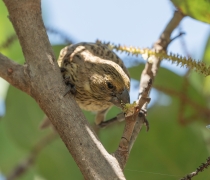
One independent hatch-year bird was observed in October; and an additional four dependent fledglings were observed in November, just four months after translocation. The discovery of fledglings so quickly after translocation bodes well for this new population and future planned translocations within Papahānaumokuākea Marine National Monument.
See July news release for more information about the project.
Visit Us
Most National Wildlife Refuges offer us all a chance to unplug from the stressors of daily life and reconnect with our natural surroundings. Although Midway Atoll National Wildlife Refuge and Battle of Midway National Memorial is currently closed to public visitation, these links provide for several exciting virtual ways to visit and even tour the Refuge.
Midway Atoll 360° Virtual Tour
Location and Contact Information
Laysan duck population at Midway Atoll reaches an all-time high, while ka‘upu nesting numbers reach 2nd all-time high and mōlī nesting numbers reach 4th all-time high
Laysan Duck numbers at Midway Atoll National Wildlife Refuge and Batlle of Midway National Memorial are at an all-time high. U.S. Fish and Wildlife Staff and volunteers recorded a total of 1,239 adult birds this week, the second time this season with counts larger than1,200 individuals and 400 more birds than in any previous year’s counts. At one seep alone (Sunset Seep on Eastern Island), there were 600 ducks in and around the waterbody, more than the entire estimated population on Kamole (Laysan Island). Laysan ducks are the second most endangered duck species in the world.
Ka‘upu (Black-footed Albatross) numbers were also surprisingly high this season with a total of 28,246 nesting Black-footed albatross nests counted. Making this year’s count the second highest all-time for kaʻupu. Of all the albatross species of Hawaiʻi, kaʻupu are the smallest in size.
Although we recorded a decrease by 5% from last year's total nest counts, mōlī (Laysan albatross) numbers actually reached the fourth highest count ever documented at Midway Atoll NWR with 589,623 Laysan albatross nests. It is not uncommon in a given year, for population counts on Midway to increase or decrease by 10 to 25%. USFWS staff have confirmed that Wisdom did not lay an egg this year, though she has been visiting Midway Atoll, including another recent visit last week.
Staff and volunteers at Midway Atoll also are celebrating the highest number of short-tailed albatross ever documented in one year at Midway with a total of 8 individuals so far in 2026.

Volunteers are essential for the Midway Atoll albatross count conducted annually. Through intensive foot surveys, our volunteers overcome challenges like storms and complex landscapes to tally mōlī and ka'upu nests, providing vital data for one of the world's largest seabird colonies. The FWS is grateful to our volunteers for their passion, dedication, and meticulous efforts year-in-and-year out—that contribute to our understanding of the health and resilience of albatross on Midway. The FWS is also thankful to the Friends of Midway Atoll a non-profit that supports the refuge by funding important activities like the albatross count.
About Us
Located on the far northern end of the Hawaiian archipelago, Midway Atoll National Wildlife Refuge and Battle of Midway National Memorial is located within the Papahānaumokuākea Marine National Monument. It is one of the oldest atoll formations in the world, and it provides nesting habitat for millions of seabirds as well as being a touchstone for one of the most significant naval battles in our human history. Today, the U.S. Fish and Wildlife Service staff, volunteers and contractors live on Midway to support the recovery and integrity of wildlife habitat and species while balancing their own human impact on the land and seascape, and protecting historical resources.
What We Do
The purpose of Midway Atoll National Wildlife Refuge and Battle of Midway National Memorial is to serve as a refuge and breeding ground for migratory birds, monk seals, sea turtles and other wildlife, while also protecting cultural resources from the Commercial Pacific Cable Company to the historic Battle of Midway.
Our Species
Midway Atoll's (Kuaihelani) three small islands provide a virtually predator-free safe haven for the world's largest albatross colony. Marine wildlife, which visit or live at the atoll, include green sea turtles, spinner dolphins, endangered Hawaiian monk seals and an unusually high number of endemic fish.
To learn about what birds, mammals, reptiles, fish, invertebrates, and plants live at Midway Atoll, see the Species section.
Projects and Research
The principal refuge management objective on land is to enhance the quality of habitat for the full diversity of nesting seabird species. This is accomplished by preventing the reintroduction of rats, controlling noxious plants and by replanting specific areas with native vegetation.
Several steps have been taken or are underway to minimize human activities that adversely impact wildlife. Examples include: the elimination of overhead wiring, the modification of lights that disorient night-flying birds and the timing of construction or repair activities to reduce wildlife impacts. Some particularly important beaches have been declared "off limits" to encourage undisturbed use of these areas by Hawaiian monk seals and Green sea turtles.