


Visit Us
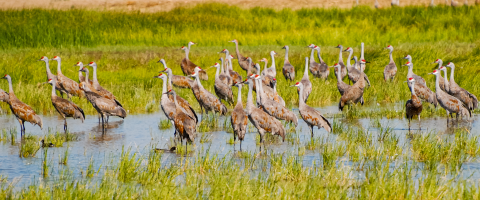
The best time of year to observe sandhill cranes, as well as other wintering birds, is during the late winter and early months of spring.
Location and Contact Information
About Us
Visitors to the Pixley National Wildlife Refuge may be surprised to see that it is home to small, seasonal marsh wetlands. What they may not know is that it has some of the last, significant acres of Southern San Joaquin Valley grassland habitat. This habitat type provides nesting, foraging, and cover for a variety of species including the threatened Tipton kangaroo rat, the blunt-nosed leopard lizard, and the endangered San Joaquin kit fox. During the winter months, it is the best place in the Southern San Joaquin Valley to view sandhill cranes.
Our Species
Since Pixley Refuge consists primarily of the Valley Grassland plant community, many grassland bird species nest on the refuge. These species include: horned lark, western meadowlark, and various species of sparrow. Wet marshes provide habitat for migrating and wintering birds. Sandhill cranes are the most prominent species that roost on Pixley Refuge wetlands. Cranes begin arriving from northern nesting grounds in September and numbers may peak at around 6,000 birds by January. At times, up to 600 Canada geese have been observed feeding in the grasslands. Some species of waterfowl seen on the moist soil units in the winter are northern shovelers, gadwalls, mallards, American wigeons, and northern pintails. These same areas also provide wintering habitat for white-faced ibis. In recent years on a single day, more than 2,000 ibis have been counted roosting in the wetlands. Wintering and migrating shorebirds also use the refuge and include black-necked stilts, greater yellowlegs, American avocets, and killdeer. Wading birds also frequent Pixley Refuge and may include black-crowned night heron, cattle egret, American bitterns, and great-blue herons. Some birds of prey common to Pixley Refuge include red-tailed hawks, American kestrel, burrowing owl, and black-shouldered kites.
At least 16 species of mammals use Pixley Refuge as habitat. Of the 26 species, 8 are carnivores and include coyotes, badgers, striped skunks, long-tailed weasels, raccoons, striped skunk, bobcat, and spotted skunk. Some other species present are long-tailed jack rabbit, desert cottontail, California ground squirrel, raccoons, California voles, Botta's pocket gopher, Heermann's kangaroo rats, deer mice, and occasionally muskrat.
Pixley Refuge provides habitat for thirteen species of reptiles and amphibians. The four lizard species include coast horned lizard, California side-blotched lizard, western fence lizards, and western whiptails. Some species of snakes encountered include Pacific gopher snake, California kingsnake, southwestern black-headed snake, western long-nosed snake, and western rattlesnake. Common amphibians seen include the Pacific treefrog, western toad, western spadefoot toad, and bullfrogs.
