The U.S. Fish and Wildlife Service has approved the establishment of Neches River National Wildlife Refuge in Anderson and Cherokee counties in Texas.
The new refuge will conserve up to 25,281 acres along 38 miles of the Neches River pending the availability of land acquisition funds. All acquisitions or easements will come from willing sellers and neighboring landowners will retain full rights and access to their properties.
The refuge will protect native wildlife species that rely on the high quality, ecologically rich bottomland hardwood forests, wetlands and riparian riparian
Definition of riparian habitat or riparian areas.
Learn more about riparian areas. Future visitors will have the opportunity to enjoy fishing, hunting, wildlife watching, photography, environmental education and interpretation.
In 1985, the Service identified this reach of the Neches River as ecologically important in its Texas Bottomland Hardwood Concept Plan and embarked on an extensive public involvement effort. The proposal for establishing the refuge was introduced in June 2004 with a number of public meetings with local residents. The Service completed an environmental assessment in March 2005 and this was followed by additional information meetings in the local area. The plan received more than 1,600 comments, the majority of which supported the refuge.
"Acquiring the full 25,281 acres may take a long time, but we are excited to begin the process of permanently protecting this ecologically significant habitat," said Service Director Dale Hall. "Most refuges start with a small parcel and are expanded as funding becomes available. We have tremendous support for the refuge from the community. I look forward to working with landowners to begin acquiring parcels as funding and availability dictate."
The Directors approval of refuge boundaries allows the Service to contact landowners to discuss the possible sale of their property for fair market value. The Migratory Bird Conservation Funds (obtained from the sale of Federal Duck Stamps) are a primary source for refuge land acquisitions that benefit migratory birds. Land and Water Conservation Funds, annually appropriated by Congress, also may be used.
Bottomland hardwoods and associated wetlands, such as those found along the North Neches River, are one of the most biologically productive habitats and vital for a wide variety of waterfowl species such as mallards, dabbling and wood ducks. Eastern Texas and Oklahoma bottomland hardwoods represent the only significant breeding habitat of the wood duck and are one of the most important wintering areas for the mallard in the central flyway, or migratory route.
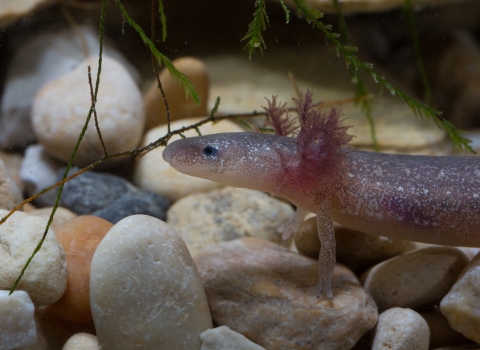
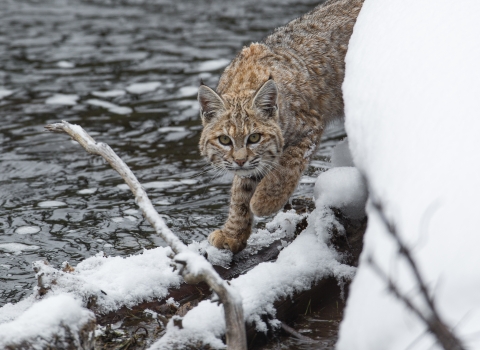
Additional species that will be protected within the approved project area are bobcat, river otter, and multiple species of fish, reptiles and amphibians; including the threatened American alligator.
"The Neches River is very beautiful and necessary to the health of the ecosystem," said Hall. "If you wonder what the refuge will look like in 50 years, simply look at the land as it is right now. You wont see much change -- and in this fast-paced world, that can be a relief."
The U.S. Fish and Wildlife Service is the principal Federal agency responsible for conserving, protecting and enhancing fish, wildlife and plants and their habitats for the continuing benefit of the American people. The Service manages the 95-million-acre National Wildlife Refuge System, which encompasses 545 national wildlife refuges, thousands of small wetlands and other special management areas. It also operates 69 national fish hatcheries, 64 fishery resources offices, and 81 ecological services field stations. The agency enforces federal wildlife laws, administers the Endangered Species Act, manages migratory bird populations, restores nationally significant fisheries, conserves and restores wildlife habitat such as wetlands, and helps foreign and Native American tribal governments with their conservation efforts. It also oversees the Federal Assistance program, which distributes hundreds of millions of dollars in excise taxes on fishing and hunting equipment to state fish and wildlife agencies.
-http://southwest.fws.gov"> -